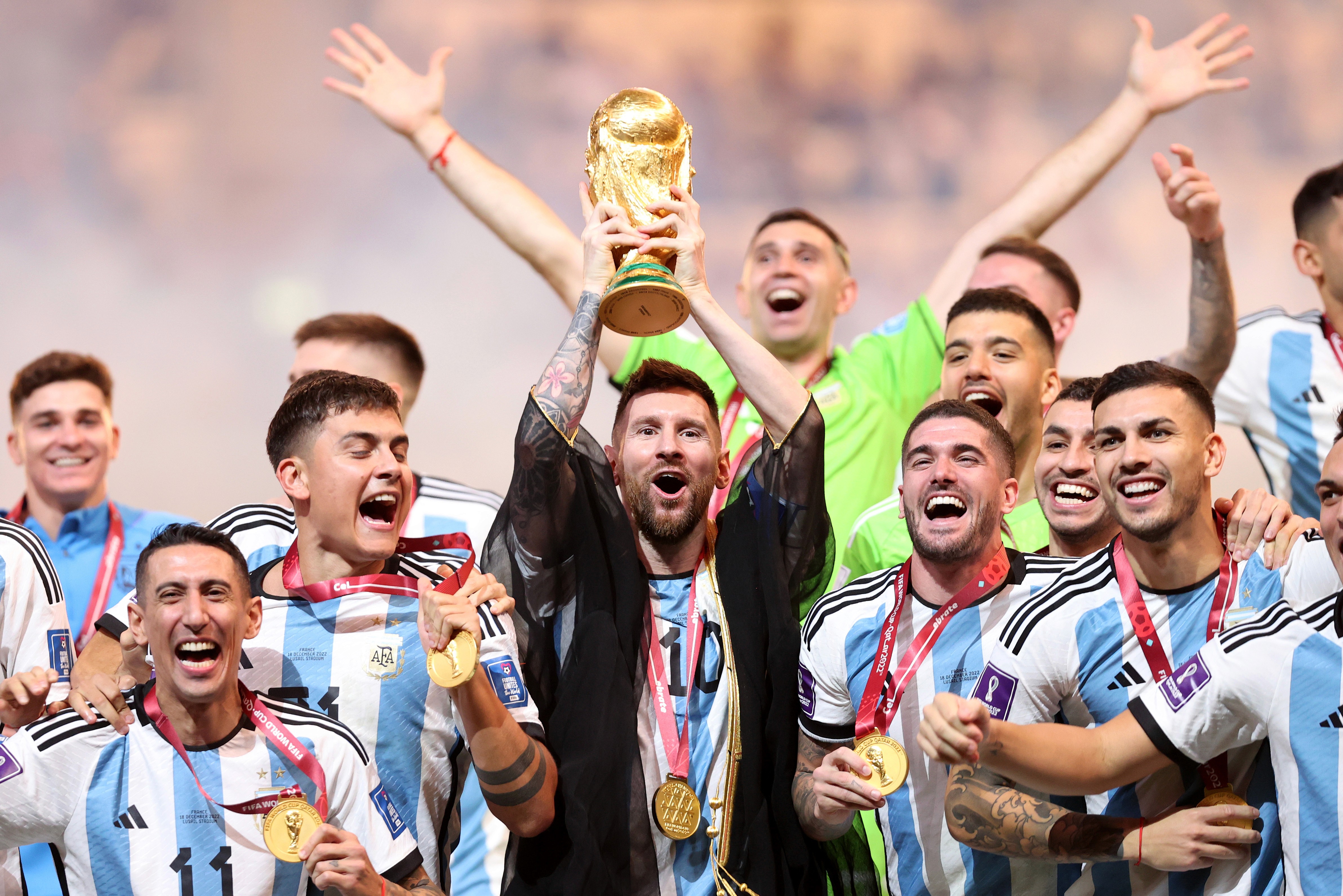
What FIFA World Cup players actually get paid
The 2026 World Cup is under way! 48 teams, 104 matches, 16 host cities across the US, Mexico, and Canada, and the biggest prize pool in the tournament's history: $655 million.
Here's the part most fans don't know. Not a single dollar of that money goes directly to a player.
We run payroll for a living, so naturally we wanted to know how the most-watched sporting event on Earth actually pays the people doing the work. The answer is a three-layer payment system that would make any payroll team sweat.
Layer 1: FIFA pays the federations
FIFA's $655 million prize pool is performance-based and paid to national federations, not players.
The payouts by finish:
Champion: $50 million
Runner-up: $33 million
Third place: $29 million
Fourth place: $27 million
Quarterfinal exit: $19 million
Round of 16 exit: $15 million
Round of 32 exit: $11 million
Group stage exit: $9 million
Every team also gets $2.5 million for preparation costs, raised from $1.5 million in 2022 after federations pushed back on the cost of competing in North America. Add it up and FIFA's total payout to federations lands around $775 million. So a team that loses all three group matches still flies home with $11.5 million.
For context, the champion in 2022 earned $42 million from a $440 million pool. The 2026 pool is nearly 50% bigger.
Layer 2: Federations pay the players
Once the money lands with a federation, each country decides how much reaches the squad. There's no FIFA rule for this. Which means there are 48 different comp plans at this tournament, and some of them are genuinely wild. Four worth knowing:
The US: one pool, two teams. Under the collective bargaining agreements signed in 2022, US Soccer pools the prize money from the men's 2026 World Cup and the women's 2027 World Cup, keeps 20%, and splits the remaining 80% equally between the two squads. The USMNT and USWNT get paid the same regardless of which team earns more. The US was the first federation in the world to do this. So when the US men win a knockout match this summer, the women's national team earns money too. That's not a feel-good press release. It's literally how the comp plan works.
Germany: the negotiated bonus ladder. The German federation negotiates a tiered, per-player bonus schedule with the squad's leadership before each tournament. The Qatar 2022 deal: 400,000 euros per player for winning it all, 50,000 euros for clearing the group stage, and zero if they missed the knockouts. Which is exactly what happened, so nobody got paid. For 2026 the DFB is doing something unusual: it hasn't committed to a number. Sporting director Andreas Rettig has said only that a title would pay more than the Qatar deal would have, and that the federation is keeping a buffer because, between costs and taxes in the US, this World Cup will lose money for most federations that don't reach the semifinals. Sit with that one. A federation can collect eight figures from FIFA and still finish the tournament in the red.
Ghana: the plane full of cash. The cautionary tale. At the 2014 World Cup in Brazil, Ghana's players hadn't been paid their appearance fees weeks into the tournament. They refused bank transfers, having been burned before, and threatened to boycott their final group match against Portugal. The government's solution: charter a plane and fly roughly $3 million in physical cash to Brazil, reimbursed later out of Ghana's FIFA prize money. FIFA's secretary general at the time said he'd offered to wire the players directly. The players wanted bills. When trust in the payment system breaks down, this is what payroll looks like.
England: the squad that works for free. Sort of. England players do earn match fees for international duty, but since 2007 the entire squad has donated 100% of those fees to the England Footballers Foundation, raising more than 5 million pounds for charities like UNICEF and Cancer Research UK. The tradition was started by a players' committee that included David Beckham and Steven Gerrard, and every squad since has kept it going. When Kylian Mbappe got headlines in 2018 for donating his French match fees, England players had already been doing it for over a decade.
Same tournament, same trophy, four completely different answers to "how do the players get paid."
Layer 3: FIFA pays the clubs
Players don't show up to the World Cup as free agents. They're employees of clubs like Real Madrid and Bayern Munich, who keep paying their salaries while they're away on international duty for up to six weeks.
FIFA compensates clubs for the loan through its Club Benefits Programme: $355 million for this World Cup cycle, up almost 70% from $209 million in 2022. The math works out to roughly $11,000 per player, per day of international duty. A club whose player makes a deep run can collect several hundred thousand dollars for one squad member. And for the first time, clubs also get paid for releasing players to qualifiers, not just the final tournament.
So what does an individual player actually make?
It depends entirely on their federation's bonus structure, which is why two players in the same match can take home wildly different amounts. A champion squad splitting a healthy share of $50 million across 26 players and staff could see seven figures per player. A group-stage exit on a federation that pays modest bonuses might mean a player earns less from the World Cup than from two weeks of their club salary.
And remember, most of these players are crossing borders to earn this money, which means cross-border tax questions stacked on top of everything else. The athletes have accountants for a reason.
The payroll takeaway
Strip away the trophies and what you have is a payment system with three layers, dozens of currencies, a different comp plan for every flag, and contractors (the clubs) getting per-day release fees on top. It's the world's most complicated payroll run, executed once every four years, with a billion people watching.
Your business probably doesn't need to split $50 million across two national teams. But if your platform serves businesses that pay people, the lesson holds: how money moves to workers is never an afterthought. It's the product.
That's the part we obsess over at RollFi. Enjoy the matches.
About Rollfi
Rollfi empowers banks, vertical SaaS platforms, accounting firms, and fintechs to add payroll and benefits to their offerings through white-label solutions and robust APIs. With Rollfi's infrastructure, platforms can unlock new revenue, boost customer retention, and gain valuable payroll data insights. Fast deployment and full regulatory coverage make Rollfi the easiest way to turn your platform into a one-stop shop for essential business services.
The 2026 World Cup is under way! 48 teams, 104 matches, 16 host cities across the US, Mexico, and Canada, and the biggest prize pool in the tournament's history: $655 million.
Here's the part most fans don't know. Not a single dollar of that money goes directly to a player.
We run payroll for a living, so naturally we wanted to know how the most-watched sporting event on Earth actually pays the people doing the work. The answer is a three-layer payment system that would make any payroll team sweat.
Layer 1: FIFA pays the federations
FIFA's $655 million prize pool is performance-based and paid to national federations, not players.
The payouts by finish:
Champion: $50 million
Runner-up: $33 million
Third place: $29 million
Fourth place: $27 million
Quarterfinal exit: $19 million
Round of 16 exit: $15 million
Round of 32 exit: $11 million
Group stage exit: $9 million
Every team also gets $2.5 million for preparation costs, raised from $1.5 million in 2022 after federations pushed back on the cost of competing in North America. Add it up and FIFA's total payout to federations lands around $775 million. So a team that loses all three group matches still flies home with $11.5 million.
For context, the champion in 2022 earned $42 million from a $440 million pool. The 2026 pool is nearly 50% bigger.
Layer 2: Federations pay the players
Once the money lands with a federation, each country decides how much reaches the squad. There's no FIFA rule for this. Which means there are 48 different comp plans at this tournament, and some of them are genuinely wild. Four worth knowing:
The US: one pool, two teams. Under the collective bargaining agreements signed in 2022, US Soccer pools the prize money from the men's 2026 World Cup and the women's 2027 World Cup, keeps 20%, and splits the remaining 80% equally between the two squads. The USMNT and USWNT get paid the same regardless of which team earns more. The US was the first federation in the world to do this. So when the US men win a knockout match this summer, the women's national team earns money too. That's not a feel-good press release. It's literally how the comp plan works.
Germany: the negotiated bonus ladder. The German federation negotiates a tiered, per-player bonus schedule with the squad's leadership before each tournament. The Qatar 2022 deal: 400,000 euros per player for winning it all, 50,000 euros for clearing the group stage, and zero if they missed the knockouts. Which is exactly what happened, so nobody got paid. For 2026 the DFB is doing something unusual: it hasn't committed to a number. Sporting director Andreas Rettig has said only that a title would pay more than the Qatar deal would have, and that the federation is keeping a buffer because, between costs and taxes in the US, this World Cup will lose money for most federations that don't reach the semifinals. Sit with that one. A federation can collect eight figures from FIFA and still finish the tournament in the red.
Ghana: the plane full of cash. The cautionary tale. At the 2014 World Cup in Brazil, Ghana's players hadn't been paid their appearance fees weeks into the tournament. They refused bank transfers, having been burned before, and threatened to boycott their final group match against Portugal. The government's solution: charter a plane and fly roughly $3 million in physical cash to Brazil, reimbursed later out of Ghana's FIFA prize money. FIFA's secretary general at the time said he'd offered to wire the players directly. The players wanted bills. When trust in the payment system breaks down, this is what payroll looks like.
England: the squad that works for free. Sort of. England players do earn match fees for international duty, but since 2007 the entire squad has donated 100% of those fees to the England Footballers Foundation, raising more than 5 million pounds for charities like UNICEF and Cancer Research UK. The tradition was started by a players' committee that included David Beckham and Steven Gerrard, and every squad since has kept it going. When Kylian Mbappe got headlines in 2018 for donating his French match fees, England players had already been doing it for over a decade.
Same tournament, same trophy, four completely different answers to "how do the players get paid."
Layer 3: FIFA pays the clubs
Players don't show up to the World Cup as free agents. They're employees of clubs like Real Madrid and Bayern Munich, who keep paying their salaries while they're away on international duty for up to six weeks.
FIFA compensates clubs for the loan through its Club Benefits Programme: $355 million for this World Cup cycle, up almost 70% from $209 million in 2022. The math works out to roughly $11,000 per player, per day of international duty. A club whose player makes a deep run can collect several hundred thousand dollars for one squad member. And for the first time, clubs also get paid for releasing players to qualifiers, not just the final tournament.
So what does an individual player actually make?
It depends entirely on their federation's bonus structure, which is why two players in the same match can take home wildly different amounts. A champion squad splitting a healthy share of $50 million across 26 players and staff could see seven figures per player. A group-stage exit on a federation that pays modest bonuses might mean a player earns less from the World Cup than from two weeks of their club salary.
And remember, most of these players are crossing borders to earn this money, which means cross-border tax questions stacked on top of everything else. The athletes have accountants for a reason.
The payroll takeaway
Strip away the trophies and what you have is a payment system with three layers, dozens of currencies, a different comp plan for every flag, and contractors (the clubs) getting per-day release fees on top. It's the world's most complicated payroll run, executed once every four years, with a billion people watching.
Your business probably doesn't need to split $50 million across two national teams. But if your platform serves businesses that pay people, the lesson holds: how money moves to workers is never an afterthought. It's the product.
That's the part we obsess over at RollFi. Enjoy the matches.
About Rollfi
Rollfi empowers banks, vertical SaaS platforms, accounting firms, and fintechs to add payroll and benefits to their offerings through white-label solutions and robust APIs. With Rollfi's infrastructure, platforms can unlock new revenue, boost customer retention, and gain valuable payroll data insights. Fast deployment and full regulatory coverage make Rollfi the easiest way to turn your platform into a one-stop shop for essential business services.
The 2026 World Cup is under way! 48 teams, 104 matches, 16 host cities across the US, Mexico, and Canada, and the biggest prize pool in the tournament's history: $655 million.
Here's the part most fans don't know. Not a single dollar of that money goes directly to a player.
We run payroll for a living, so naturally we wanted to know how the most-watched sporting event on Earth actually pays the people doing the work. The answer is a three-layer payment system that would make any payroll team sweat.
Layer 1: FIFA pays the federations
FIFA's $655 million prize pool is performance-based and paid to national federations, not players.
The payouts by finish:
Champion: $50 million
Runner-up: $33 million
Third place: $29 million
Fourth place: $27 million
Quarterfinal exit: $19 million
Round of 16 exit: $15 million
Round of 32 exit: $11 million
Group stage exit: $9 million
Every team also gets $2.5 million for preparation costs, raised from $1.5 million in 2022 after federations pushed back on the cost of competing in North America. Add it up and FIFA's total payout to federations lands around $775 million. So a team that loses all three group matches still flies home with $11.5 million.
For context, the champion in 2022 earned $42 million from a $440 million pool. The 2026 pool is nearly 50% bigger.
Layer 2: Federations pay the players
Once the money lands with a federation, each country decides how much reaches the squad. There's no FIFA rule for this. Which means there are 48 different comp plans at this tournament, and some of them are genuinely wild. Four worth knowing:
The US: one pool, two teams. Under the collective bargaining agreements signed in 2022, US Soccer pools the prize money from the men's 2026 World Cup and the women's 2027 World Cup, keeps 20%, and splits the remaining 80% equally between the two squads. The USMNT and USWNT get paid the same regardless of which team earns more. The US was the first federation in the world to do this. So when the US men win a knockout match this summer, the women's national team earns money too. That's not a feel-good press release. It's literally how the comp plan works.
Germany: the negotiated bonus ladder. The German federation negotiates a tiered, per-player bonus schedule with the squad's leadership before each tournament. The Qatar 2022 deal: 400,000 euros per player for winning it all, 50,000 euros for clearing the group stage, and zero if they missed the knockouts. Which is exactly what happened, so nobody got paid. For 2026 the DFB is doing something unusual: it hasn't committed to a number. Sporting director Andreas Rettig has said only that a title would pay more than the Qatar deal would have, and that the federation is keeping a buffer because, between costs and taxes in the US, this World Cup will lose money for most federations that don't reach the semifinals. Sit with that one. A federation can collect eight figures from FIFA and still finish the tournament in the red.
Ghana: the plane full of cash. The cautionary tale. At the 2014 World Cup in Brazil, Ghana's players hadn't been paid their appearance fees weeks into the tournament. They refused bank transfers, having been burned before, and threatened to boycott their final group match against Portugal. The government's solution: charter a plane and fly roughly $3 million in physical cash to Brazil, reimbursed later out of Ghana's FIFA prize money. FIFA's secretary general at the time said he'd offered to wire the players directly. The players wanted bills. When trust in the payment system breaks down, this is what payroll looks like.
England: the squad that works for free. Sort of. England players do earn match fees for international duty, but since 2007 the entire squad has donated 100% of those fees to the England Footballers Foundation, raising more than 5 million pounds for charities like UNICEF and Cancer Research UK. The tradition was started by a players' committee that included David Beckham and Steven Gerrard, and every squad since has kept it going. When Kylian Mbappe got headlines in 2018 for donating his French match fees, England players had already been doing it for over a decade.
Same tournament, same trophy, four completely different answers to "how do the players get paid."
Layer 3: FIFA pays the clubs
Players don't show up to the World Cup as free agents. They're employees of clubs like Real Madrid and Bayern Munich, who keep paying their salaries while they're away on international duty for up to six weeks.
FIFA compensates clubs for the loan through its Club Benefits Programme: $355 million for this World Cup cycle, up almost 70% from $209 million in 2022. The math works out to roughly $11,000 per player, per day of international duty. A club whose player makes a deep run can collect several hundred thousand dollars for one squad member. And for the first time, clubs also get paid for releasing players to qualifiers, not just the final tournament.
So what does an individual player actually make?
It depends entirely on their federation's bonus structure, which is why two players in the same match can take home wildly different amounts. A champion squad splitting a healthy share of $50 million across 26 players and staff could see seven figures per player. A group-stage exit on a federation that pays modest bonuses might mean a player earns less from the World Cup than from two weeks of their club salary.
And remember, most of these players are crossing borders to earn this money, which means cross-border tax questions stacked on top of everything else. The athletes have accountants for a reason.
The payroll takeaway
Strip away the trophies and what you have is a payment system with three layers, dozens of currencies, a different comp plan for every flag, and contractors (the clubs) getting per-day release fees on top. It's the world's most complicated payroll run, executed once every four years, with a billion people watching.
Your business probably doesn't need to split $50 million across two national teams. But if your platform serves businesses that pay people, the lesson holds: how money moves to workers is never an afterthought. It's the product.
That's the part we obsess over at RollFi. Enjoy the matches.
About Rollfi
Rollfi empowers banks, vertical SaaS platforms, accounting firms, and fintechs to add payroll and benefits to their offerings through white-label solutions and robust APIs. With Rollfi's infrastructure, platforms can unlock new revenue, boost customer retention, and gain valuable payroll data insights. Fast deployment and full regulatory coverage make Rollfi the easiest way to turn your platform into a one-stop shop for essential business services.